Low Ferritin in Perimenopause: Natural Remedies to Restore Iron Levels
Many women entering perimenopause begin experiencing symptoms like extreme fatigue, hair thinning, dizziness, shortness of breath, and brain fog.
Often these symptoms are blamed entirely on hormones. However, one of the most overlooked root causes is low ferritin.
Ferritin is the protein that stores iron in the body, and when ferritin levels drop, your cells struggle to produce enough oxygen and energy.
Many women start searching for natural remedies for perimenopause fatigue when they feel exhausted all the time. But what many don’t realize is that low ferritin in women is incredibly common during perimenopause, especially if you have heavy periods.
If you’re looking for natural ways to support your body during midlife, my Ultimate Juicing Bundle for Perimenopause provides targeted recipes designed to help reduce inflammation, support mineral levels, and nourish your body during hormonal transitions.
These recipes focus on nutrient-dense vegetables and fruits that support overall health, energy production, and hormone balance.
What Is Ferritin and Why It Matters in Perimenopause
Ferritin is a protein that stores iron inside your cells. Your body uses iron to produce hemoglobin, which carries oxygen throughout your body.
When ferritin levels become low, the body cannot efficiently deliver oxygen to tissues and organs.
This can lead to symptoms such as:
• chronic fatigue
• hair loss
• pale skin
• dizziness
• shortness of breath
• heart palpitations
• brain fog
• poor exercise tolerance
Many women experiencing these symptoms begin searching for natural remedies for perimenopause fatigue, when the root issue may actually be low ferritin levels.
Why Low Ferritin Is Common in Perimenopause
Several factors can contribute to low ferritin levels during midlife:
Heavy Menstrual Bleeding
Hormonal fluctuations during perimenopause can cause heavier periods, which increases iron loss.
Poor Iron Absorption
Even when women consume iron-rich foods, the body may struggle to absorb it without key nutrients like vitamin C.
Chronic Inflammation
Inflammation can block iron absorption and reduce ferritin levels.
Stress and Hormonal Changes
Hormonal shifts can influence metabolism and nutrient absorption.
This is why focusing on anti-inflammatory nutrition and vitamin C-rich foods can help support iron absorption.
Why Juicing Can Help Support Iron Levels
Juicing is a powerful way to provide the body with highly absorbable vitamins, minerals, and antioxidants.
When it comes to supporting iron levels, vitamin C is particularly important because it dramatically improves iron absorption.
Fresh juices made from vegetables and fruits can help support:
• improved nutrient absorption
• reduced inflammation
• better digestion
• overall energy production
These benefits make juicing one of the most powerful natural remedies for perimenopause fatigue and low ferritin support.
If you want step-by-step guidance on using juicing for hormone and mineral support, my Ultimate Juicing Bundle includes targeted recipes designed for women navigating midlife.
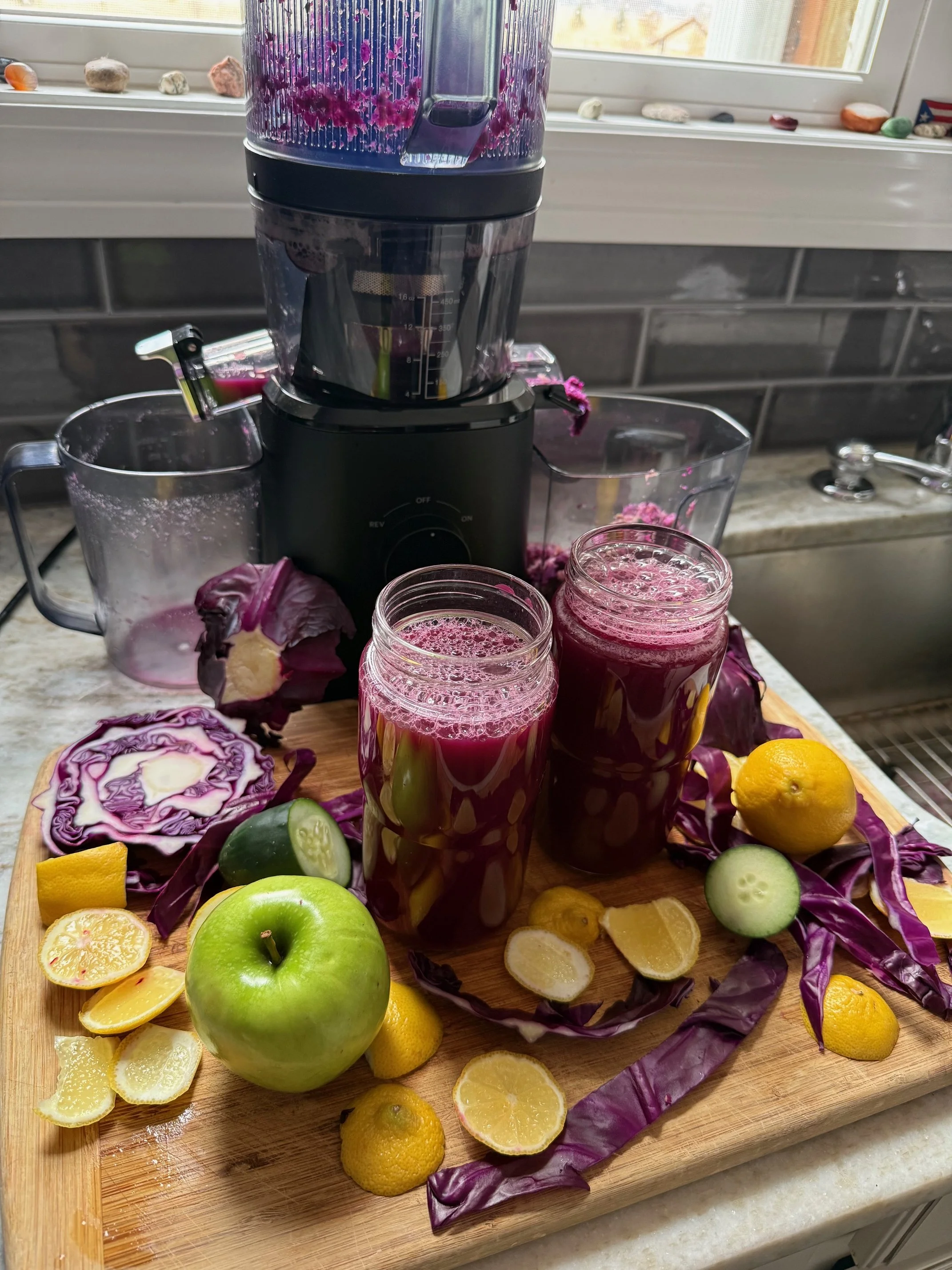
Iron Support Juice Recipe #1
Purple Cabbage Iron Support Juice
Ingredients
• 2 cups purple cabbage
• 2 green apples
• 1 lemon
Why this juice helps
Purple cabbage contains antioxidants and plant compounds that support overall cellular health.
Green apples provide natural vitamin C and polyphenols that support digestion and nutrient absorption.
Lemon is extremely rich in vitamin C, which helps the body absorb iron more efficiently.
Benefits include:
• improved iron absorption
• reduced inflammation
• improved digestion
• increased energy support
The Importance of Vitamin C for Iron Absorption
Vitamin C plays a critical role in helping the body absorb non-heme iron, the type of iron found in plant foods.
Without vitamin C, iron absorption can be significantly reduced.
This is why combining vitamin C-rich ingredients like lemon and apples with mineral-rich vegetables can support overall nutrient absorption.
Many women searching for natural remedies for low ferritin are surprised to learn that improving vitamin C intake can help support better iron utilization.
Iron Support Juice Recipe #2
Midlife Energy Juice
Ingredients
• 2 cups purple cabbage
• 1 green apple
• 1 cucumber
Why this juice helps
Purple cabbage provides antioxidants that support cellular health.
Cucumber helps hydrate the body and support digestion.
Green apples provide vitamin C and natural plant compounds that help support nutrient absorption.
Benefits include:
• improved hydration
• digestive support
• reduced inflammation
• energy support
Why Inflammation Can Affect Iron Levels
Chronic inflammation can interfere with iron metabolism.
When inflammation is present, the body produces a hormone called hepcidin, which blocks iron absorption.
This means that even if you are consuming enough iron, the body may struggle to utilize it properly.
This is why focusing on anti-inflammatory nutrition is one of the most important strategies for supporting iron levels during perimenopause.
Iron Support Juice Recipe #3
Anti-Inflammatory Iron Support Juice
Ingredients
• 1½ cups purple cabbage
• 1 cucumber
• 1 lemon
Why this juice works
This combination provides antioxidants, hydration, and vitamin C to support nutrient absorption and overall cellular health.
Benefits include:
• improved digestion
• reduced inflammation
• hydration support
• better nutrient absorption
Watch My youtube Video
If you'd like to see exactly how I make these juices, watch my Instagram video where I walk through the ingredients and explain why they support women experiencing perimenopause fatigue.
Watch the video here:
In the video I also share how juicing has personally helped me reduce inflammation, support my energy levels, and feel stronger during midlife.
The Juicer I Recommend
If you’re starting your juicing journey, the juicer you use can make a big difference.
I personally recommend the Nama J2 Juicer because it allows you to batch juice and produces high-quality nutrient-dense juice.
You can save $60 on the Nama J2 Juicer with my exclusive discount code EVIE10.
Many women in my community love this juicer because it makes juicing simple and convenient.
Supporting Energy and Iron Levels in Midlife
Low ferritin is one of the most overlooked contributors to fatigue in women during perimenopause.
By focusing on nutrient-dense foods, vitamin C-rich ingredients, and anti-inflammatory nutrition, women can support their bodies during this transition.
Juicing can be a powerful tool to help nourish the body with vitamins and antioxidants that support overall wellness.
If you’d like a structured plan, my Ultimate Juicing Bundle for Perimenopause provides targeted recipes and strategies designed specifically for women navigating hormonal changes.
Low ferritin can significantly impact energy levels, mood, and overall health during perimenopause.
Supporting the body with nutrient-rich juices made with purple cabbage, green apples, lemon, and cucumber can help provide antioxidants, vitamin C, and hydration that support overall wellness.
Combined with strength training, anti-inflammatory nutrition, and lifestyle support, these strategies can help women thrive during midlife.
If you're ready to start your hormone-supporting juicing journey, explore my Ultimate Juicing Bundle for recipes designed specifically for perimenopause.